My Top React Interview Questions
This article summarizes a list of React interview questions that I would ask candidates and that I get often asked in interviews.
Article8 minCareerReact

Category · 70 articles
Articles in the category Development.
This article summarizes a list of React interview questions that I would ask candidates and that I get often asked in interviews.
The twelve-factor app is a known methodology for building software-as-a-service apps. One factor describes that an application's configuration should be stored in the environment and not in the code to enforce a strict separation of config from code.
Recently I recognized that some SaaS (Software as a Service) products use AWS Amplify which helps them to build serverless full-stack applications. I think serverless computing will be the future of apps and software. Therefore, I wanted to gather some hands-on experience, and I built a serverless application using AWS Amplify that uses React as frontend framework and GraphQL as backend API.
I recently joined a project where the team used two separate Git repositories for their web components based on Stencil and Storybook. But the idea of Storybook is that the so-called "stories" live next to the components source code. Therefore, it made no sense to me to have those two tools in different repositories, and I combined them both in one repository.

React is known for its performance by using the Virtual DOM (VDOM). It only triggers an update for the parts of the real DOM that have changed. In my opinion, it is important to know when React triggers a re-rendering of a component to be able to debug performance issues and develop fast and efficient components.
On my main domain mokkapps.de I have deployed my private portfolio website. For different use cases, I want to have a Node.js backend deployed to a subdomain, e.g. api.mokkapps.de.

It is important to monitor an application's metrics and health which helps us to improve performance, manage the app in a better way, and notice unoptimized behavior. Monitoring each service is important to be able to maintain a system that consists of many microservices.

Creating a changelog is a usual task if a new software version is going to be released. It contains all the changes which were made since the last release and is helpful to remember what has changed in the code and to be able to inform the users of our code.

On Hacker News I discovered the article Building a self-updating profile README for GitHub. I was very fascinated about this new GitHub feature and wanted to build something similar for my GitHub profile.
In my current project my colleague Michael Seifert introduced property based testing in our Python codebase. It was the first time I heard about it and it sounded fascinating, so I wanted to also implement it in our frontend code based on Vue.js with Jest as testing framework and TypeScript as programming language.

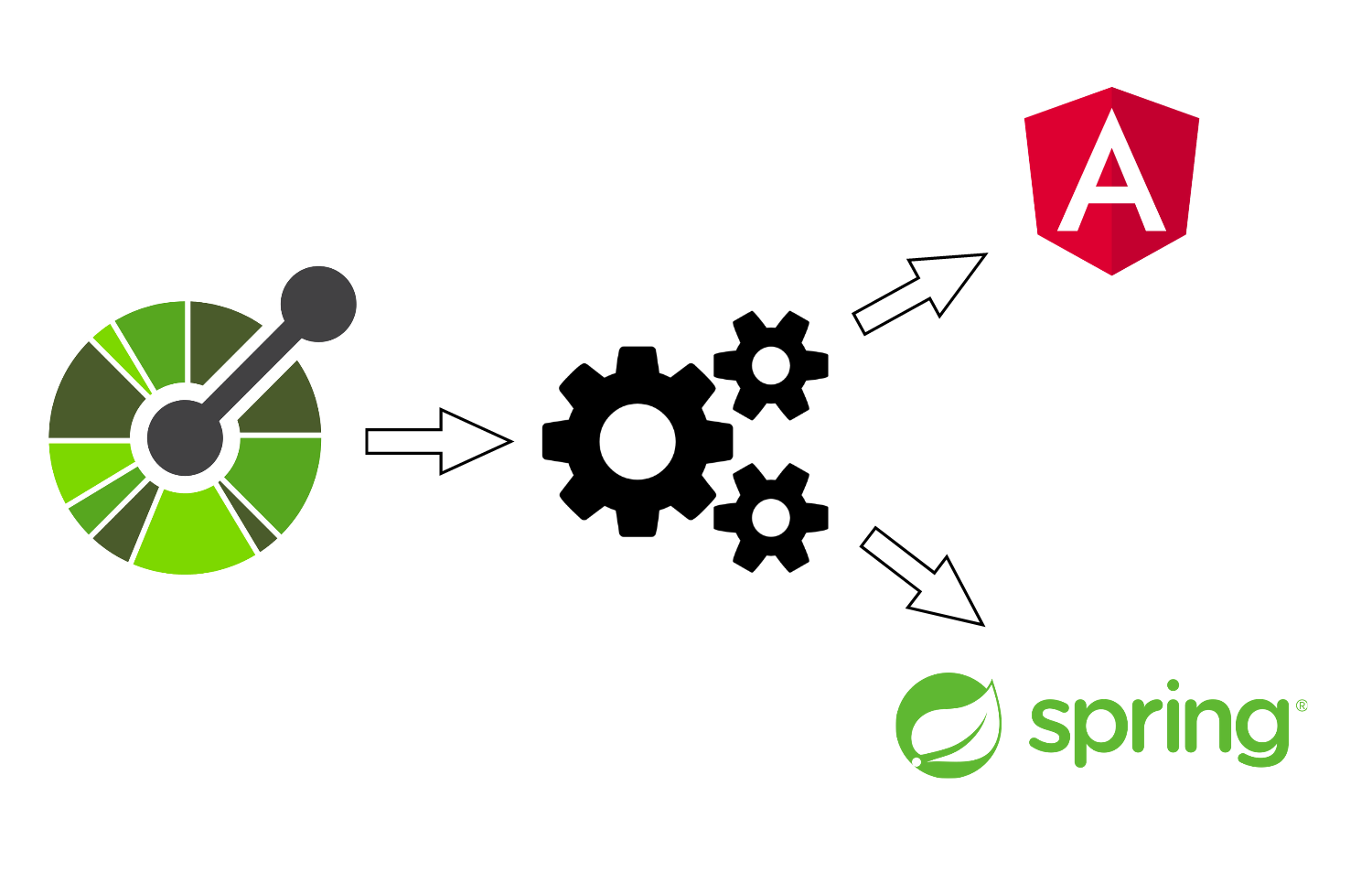
If you are developing the backend and frontend part of an application you know that it can be tricky to keep the data models between the backend & frontend code in sync. Luckily, we can use generators that generate server stubs, models, configuration and more based on a OpenAPI specification.
In my current, I had the opportunity to develop a new application based on Vue.js in the frontend and Spring Boot in the backend. The backend should send updates to the frontend via a WebSocket connection so that users do not need to refresh the website to see the latest information.

In Angular enterprise applications, it is often a requirement to load a configuration from a server via HTTP request which contains a UI configuration. Based on this configuration data, multiple modules and/or components need to be lazy-loaded and its routes dynamically added to the application.
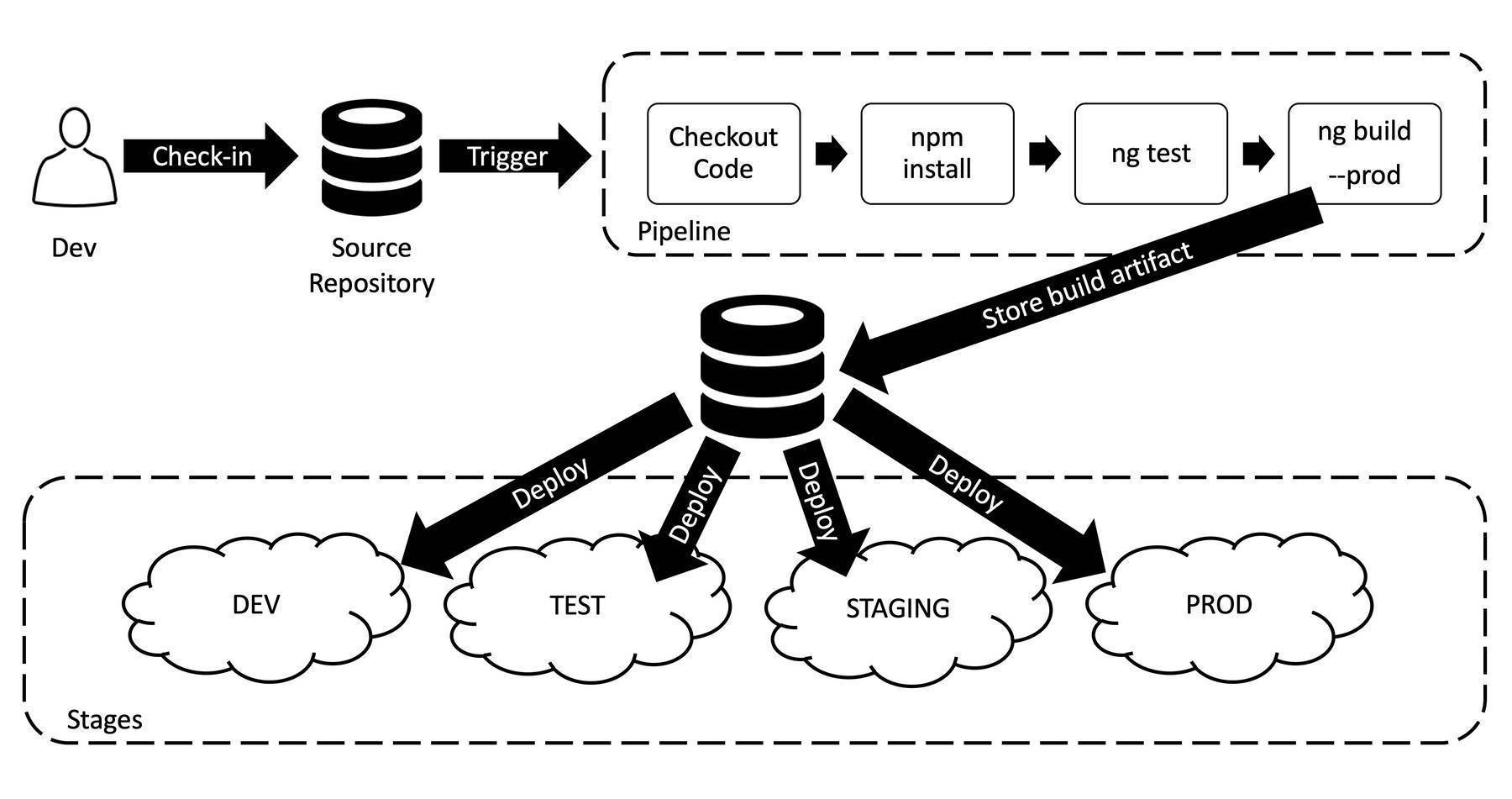
In my last projects, we always had the same requirement: Build the application once and deploy the same build fragment to multiple environments. This leads to some technical challenges, as we need to be able to inject environment-specific information to our application during runtime.
Angular's Change Detection is a core mechanic of the framework but (at least from my experience) it is very hard to understand. Unfortunately, there exists no official guide on the official website about this topic.
In the last years, I mainly worked on the frontend part of web & mobile applications, but I also did some minor backend work. Since mid of this year, I have been working to improve my backend knowledge and started to focus on Java backend development using Spring Boot.

End of 2018, I wrote an article about how I write marble tests for RxJS observables in Angular. The content is still valid, but I recently found a new library that I like and makes debugging marble tests easier.

I think Angular is the best choice for large enterprise applications. The basic project setup, which is generated using the Angular CLI is good, but I prefer another way to set up a new project. In this article, I want to talk about these topics:

I think we all know this problem: You need to develop a new web application, and therefore, you need to implement the application's core in the backend and frontend. Both can be time-consuming, and if you make the wrong architectural decisions in the beginning, they can hardly be maintainable over time.
Update 12.02.2018: Meanwhile, I have created a PR to the Angular Material repository and added there an official guide