3 Min.Vue.jsNuxt.js
How to Set Up an MCP Server for an Existing Nuxt App
A beginner-friendly, practical guide to adding an MCP server to an existing Nuxt app using the Nuxt MCP Toolkit and a mocked weather tool.
Blog · 79 Artikel
Wenn 280 Zeichen auf X nicht ganz ausreichen, schreibe ich meine ausführlichen Gedanken hier.
A beginner-friendly, practical guide to adding an MCP server to an existing Nuxt app using the Nuxt MCP Toolkit and a mocked weather tool.
Explore the implications of Vercel's acquisition of NuxtLabs and what it means for the Nuxt community. Discover how this will influence innovation, access to tools, and the broader ecosystem.
Discover how Edge-Side Rendering (ESR) can be employed in Nuxt 3++ applications to improve performance by rendering content at the edge, closer to the end-user.

Discover the reasons behind the development of my unique Nuxt starter kit tailored for creating SaaS products. Learn why I opted for a highly opinionated and custom solution over existing options, and how it enhances productivity and maintainability.
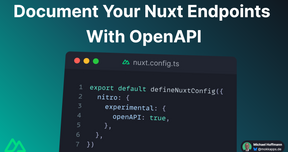
Learn how to document your Nuxt endpoints using OpenAPI and easily visualize them with Swagger or Scalar. This guide walks you through setting up API documentation for better clarity, maintainability, and developer collaboration.
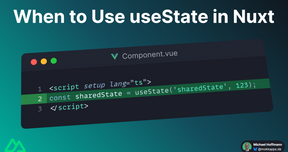
Nuxt provides the useState composable which creates a reactive and SSR-friendly shared state. You might be confused when to use useState or ref in your Nuxt app. In this article, I want to answer this question
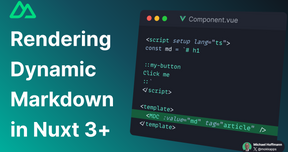
Learn how to dynamically render markdown content in a Nuxt 3+ application using the @nuxtjs/mdc module.
In one of my client projects, we recently had to analyze and fix a memory leak in our Nuxt 3+ application. I share my experience and our steps to identify and fix the memory leak.

Learn how to dockerize your Nuxt 3+ application to ensure consistency, isolation, scalability, and portability across different environments. This guide walks you through the steps to create a Docker container for your Nuxt 3+ app, making deployment seamless and efficient.
I share my experiences of how I self-hosted my Nuxt apps with Coolify on Hetzner servers.

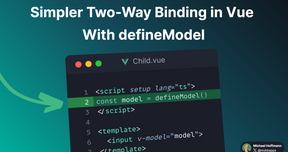
The new defineModel compiler macro has available since Vue 3.4 and makes two-way binding much simpler and cleaner.
Learn how to login a user via the Supabase REST API in a Playwright end-to-end test and test authenticated pages.
Nitro is a sever toolkit that allows you to create web servers with everything you need and deploy them wherever you prefer. It is used in Nuxt 3 to power the server-side part of your Nuxt applications. In this article, I will show you can use Nitro as a mock server for your frontend development.
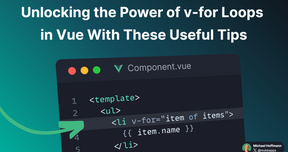
Looping through arrays and objects is a common task in Vue applications. The v-for directive is the perfect tool for this job. It is mighty, and you can use it in many different ways. In this article, I will show you some valuable tips and tricks to get the most out of the v-for directive.
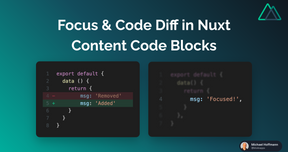
Custom code blocks are essential for my blog as my articles usually contain a lot of code snippets. My blog is powered by Nuxt Content v2, which is a Nuxt 3 module. I already wrote an article about how you can create custom code blocks using Nuxt Content v2.
In this blog post, I'll show you how a simple mechanism to lazy load your Vue components if they become visible using the Intersection Observer API.

With Nuxt 3's rendering modes, you can execute API calls and render pages both on the client and server, which has some challenges. For example, we want to avoid duplicate network calls, efficient caching, and ensure that the calls work across environments. To address these challenges, Nuxt provides a built-in data fetching library ($fetch) and two composable (useFetch and useAsyncData).